- 100 School
- Posts
- 💯 Digest: You're using AI every day but it still feels weird
💯 Digest: You're using AI every day but it still feels weird
Only a few hours left to join the 30 Days of AI challenge, how AI broke the career ladder + what good teams are doing about it

Max Haining
November 02, 2025
Hey, it's Max 👋
This week, I realized something spooky.
Everywhere I look: Slack threads, LinkedIn posts, team trainings, people are technically using AI. But you can still feel that uneasy “are we doing this right?” energy.
I also keep seeing that viral chart (the one showing AI coming for junior roles) and realized why so many managers sound conflicted: AI is quietly ripping out the first rung of the career ladder. The part where you learn by sitting next to someone with more experience… and ask dumb questions without getting roasted.
This chart says everything about how AI is changing work.
AI didn’t kill jobs. It killed junior roles.
One senior with AI now replaces an entire team.
The era of 10x engineers just became real.
— Aadit Sheth (@aaditsh)
10:43 AM • Oct 27, 2025
When entry-level tasks get automated, the work still gets done but the training disappears. The Economist’s graphic just makes it visible. It’s not official headcount data yet but the trend is clear and moving fast.
I posted that graph with my thoughts on how it relates to university system. Then I opened two new reports: Wharton’s AI adoption report and Skills England’s latest AI Skills report and the pieces snapped together.
The real fear inside companies right now
Wharton’s latest AI Adoption report showed that nearly 9 in 10 organizations are experimenting with AI but only 1 in 7 say they’re confident their people can actually apply it.
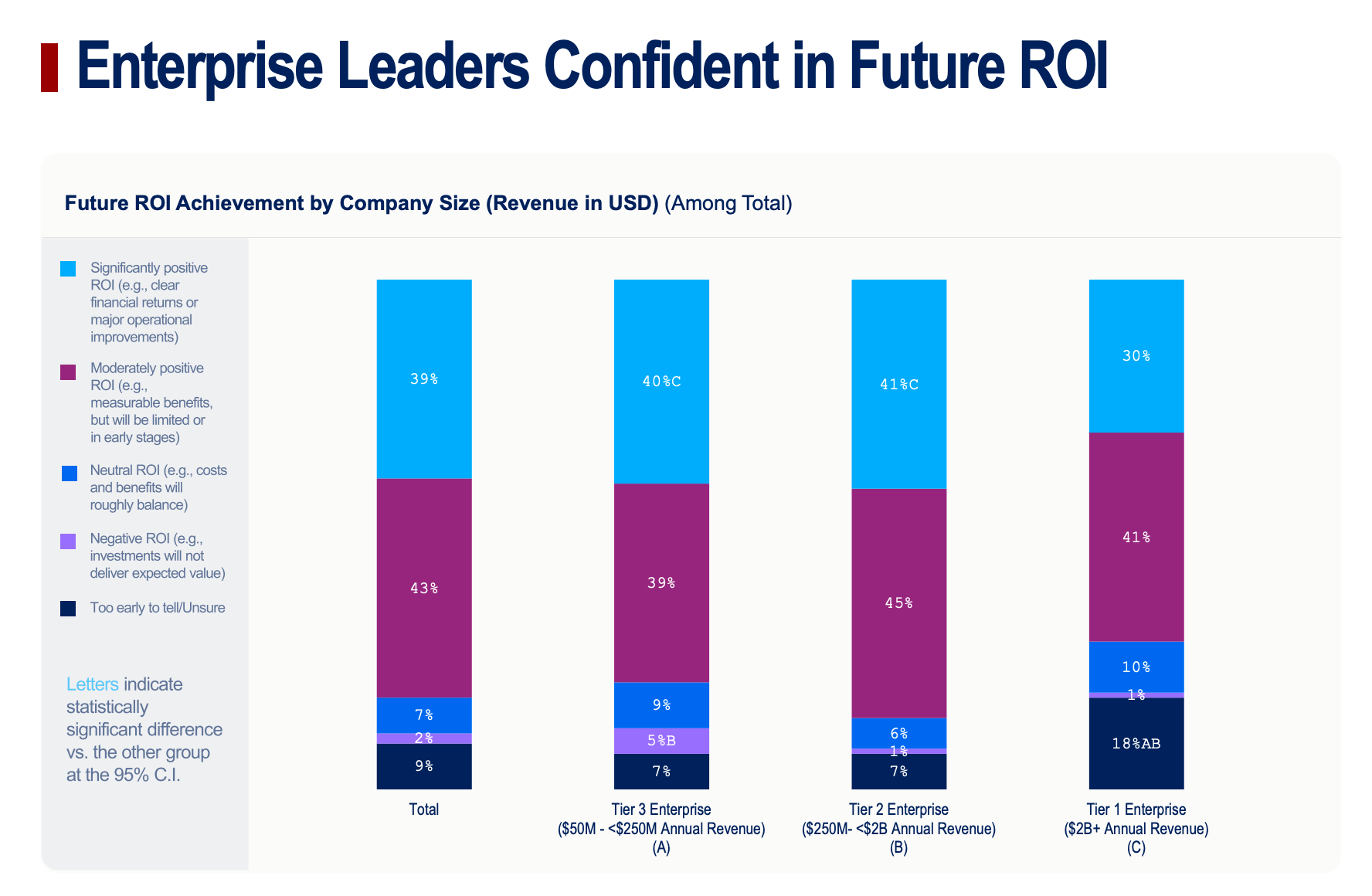
4 out of 5 enterprises see their Gen AI investments paying off in the next 2 to 3 years
So even when people are using AI, they’re still wondering:
“Am I doing this wrong?”
“Is there some better prompt I don’t know about?”
“What if this replaces the part of my job I actually like?”
I’ve been deep in these questions lately; running teams trainings, reading reflections from 30 Days of AI participants, in DMs with team leads, and in those reports. And it all points to the same thing:
The technical barrier is gone, but the emotional one is still very much alive.
What leaders are actually solving for
The report from Skills England divides AI skills into four levels: awareness, application, adaptation, alignment. And what’s wild is that across every sector, the #1 barrier holding teams back is the lack of confidence in spotting where AI even adds value.
If you’ve ever sat in a meeting where everyone nods at “we should use AI more” and then nobody changes their workflow on Monday, you’ve seen this movie.
That’s not a tooling issue. That’s a trust issue. So this week, instead of giving you a list of “AI tricks,” here’s a short reflection you can actually do.
Something to try this Week ✅
Pick one task you did this week that drained your energy. Something repetitive, unclear, or just dull.
Ask yourself: “What part of this task could AI haunt next?”
(meaning: what could it do better, faster, or weirder than me?)Then flip it: “What part of this task would still feel empty if AI did it for me?”
That second question is where your actual value lives. That’s the part to double down on and the rest, automate without guilt.
If it works, rinse for a second task next week. If it doesn’t, reply and tell me where it broke.
30 Days of AI starts tomorrow ⏰
Our next round of 30 Days of AI Challenge starts tomorrow, Nov 3 with 2,300+ professionals from around the world building daily habits that change the way you think with AI.
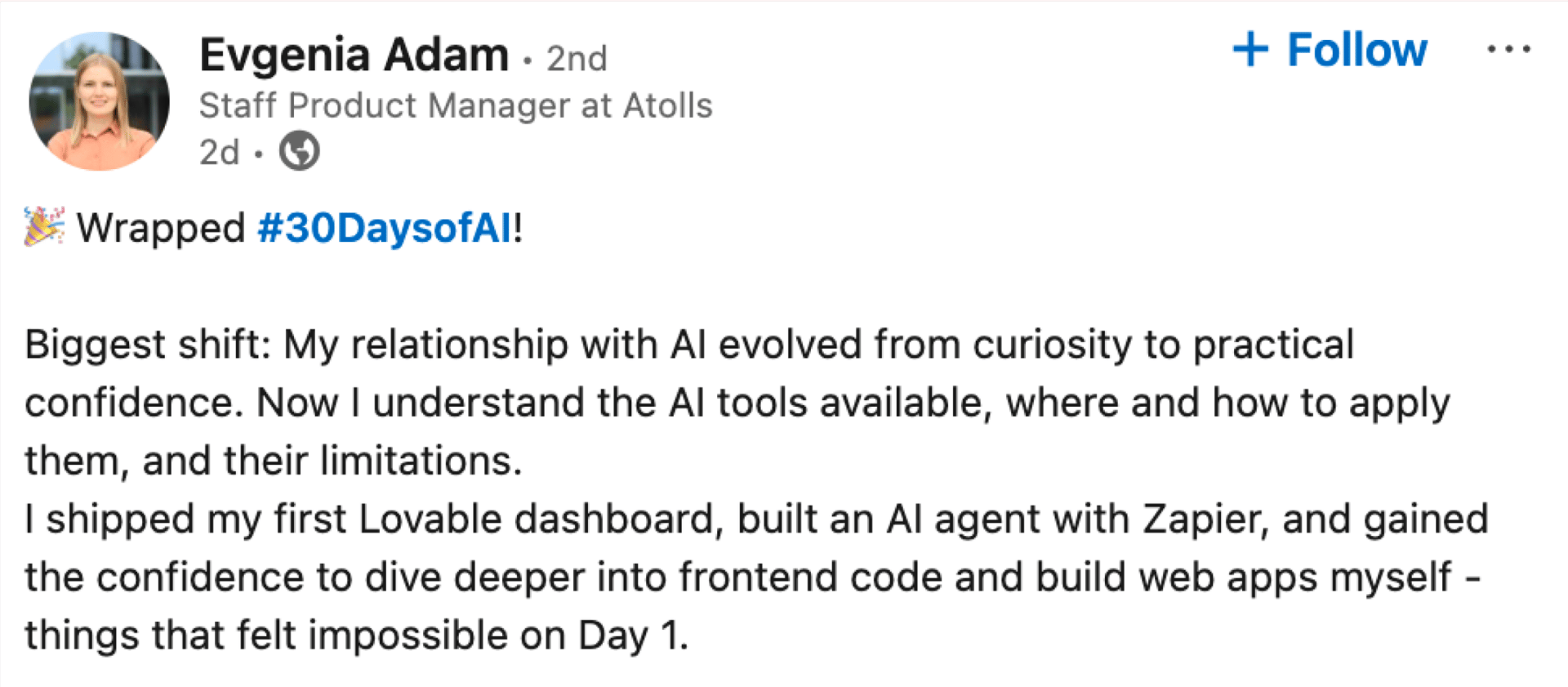
If you’ve been meaning to stop doomscrolling and actually learn by doing, this is your sign 👇
Until next time
Don’t fear the ghost in the machine. Invite it to your next team meeting 👻 💯
Cheers!
Max 👋
P.S. Want to make your team & company AI-first? Let us help here.
